
Water Heater Leaking? What to Do First, Common Causes & When to Call
How to stop the damage in the first few minutes, find where the water is coming from, and tell whether you need a repair or a new water heater.
In this guide
Turn off the power (electric) or set the gas valve to OFF or PILOT (gas), then close the cold-water valve on the pipe feeding the top of the tank. Next, find where the water is coming from. Leaks from fittings, the drain valve or the relief valve can usually be repaired, but water coming from the tank itself means the water heater needs to be replaced.
A puddle next to your water heater is one of the most common calls we get, and one of the most important to deal with quickly. Some leaks are a ten-minute fix. Others mean the tank itself has failed. This guide walks you through what to do in the first few minutes, how to find where the water is coming from, and how to tell whether you’re looking at a repair or a replacement.
What to do first when your water heater is leaking
Safety first. If water is near an electrical outlet, panel or extension cord, don’t walk through it. If you smell gas, leave the house and call 911 or your gas company from outside. The water coming out of a water heater can also be hot enough to scald.
- Turn off the power or gas. On an electric water heater, switch off its breaker in the electrical panel (it’s usually a double breaker labeled “water heater”). On a gas water heater, turn the control knob on the front of the gas valve to OFF or PILOT.
- Shut off the cold water supply. Find the valve on the cold-water pipe going into the top of the tank and close it. A lever handle should sit across the pipe; a round handle turns clockwise. This stops the tank from refilling.
- Contain the water. Use towels, a bucket or a wet/dry vacuum, and move boxes, rugs and anything else that can be damaged away from the area.
- Find where the leak is coming from. Dry everything off, then watch where fresh water appears. Take a few photos; they help a plumber give you a faster, more accurate answer.
- Drain the tank only if the tank itself is leaking. Let the water cool first, connect a garden hose to the drain valve near the bottom and run it to a floor drain or outside. If you’re not comfortable doing this, leave it to us.
Where is the water coming from?
The location of the leak tells you almost everything. Start at the top of the heater and work your way down.
| Where you see water | Most likely cause | Usually fixable? |
|---|---|---|
| Top of the tank, at the pipes | Loose or corroded inlet/outlet fittings, a worn supply line or a failing shut-off valve | Yes, fittings and lines can be replaced |
| Relief valve or the pipe running down the side | Too much pressure or temperature in the tank, thermal expansion, or a worn relief valve | Yes, but the cause must be found |
| Drain valve near the bottom | Valve not fully closed, a worn washer or a cracked plastic valve | Yes, the valve can be tightened or replaced |
| Bottom of the tank or under the outer jacket | The inner tank has corroded through | No, the water heater needs replacing |
| A small puddle but the tank looks dry | Condensation, or a nearby AC line, humidifier or softener | Often not a water heater problem |
Leaks at the top of the water heater
Water at the top usually comes from the connections. Over time, the fittings where the hot and cold lines meet the tank can corrode, especially where copper meets steel. Flexible supply lines and the cold-water shut-off valve can also wear out. These are repairable, and catching them early prevents water from running down into the insulation.
Water from the temperature and pressure relief valve
The relief valve is a safety device. It opens to release water if the temperature or pressure inside the tank gets too high. Occasional dripping can point to high water pressure, thermal expansion in a home without an expansion tank, a thermostat set too high, or a valve that’s simply worn out.
Never cap or plug a dripping relief valve. It’s there to keep the tank from building dangerous pressure. Have the cause checked instead.
Leaks at the drain valve
The drain valve sits near the bottom of the tank and is used for flushing. If it drips from the spout, it may not be fully closed or its washer may be worn. Many heaters come with plastic drain valves that can crack with age. Replacing the valve is a routine repair.
Water leaking from the bottom of the tank
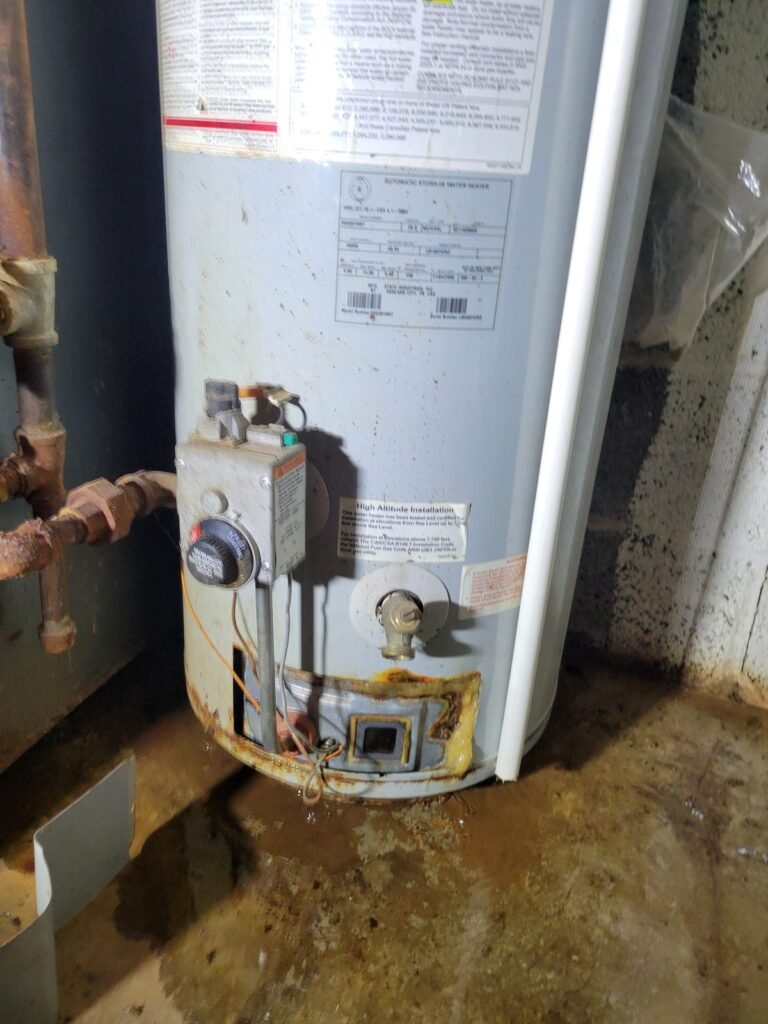
If water is coming from under the heater itself, or you see rust and moisture around the base, the inner steel tank has most likely corroded through. Tank leaks can’t be patched. They also tend to get worse, sometimes quickly, so plan on replacing the water heater.
Is a leaking water heater dangerous?
A slow drip isn’t usually an emergency on its own, but it shouldn’t be ignored. Water can soak into drywall, flooring and framing and lead to mold. Water near electrical equipment is a shock risk. And a tank that has started leaking from the bottom can fail and release much more water without warning. If the leak is getting bigger, or water is coming from the relief valve while the tank is making noise, turn off the power or gas and the water supply and call a professional.
When to call a pro
Call us if the tank itself is leaking, the relief valve keeps discharging, you’re not sure where the water is coming from, or you’re not comfortable working around gas, electricity or hot water. We’re available 24/7.
Repair or replace a leaking water heater?
Here’s the honest rule of thumb we use on every leak call:
- Usually worth repairing: leaks from fittings, supply lines, the drain valve or the relief valve on a heater that is otherwise in good condition and less than about 8 to 10 years old.
- Usually time to replace: any leak from the tank itself, rust around the base, rusty hot water, or a tank that is more than about 10 years old and starting to have problems.
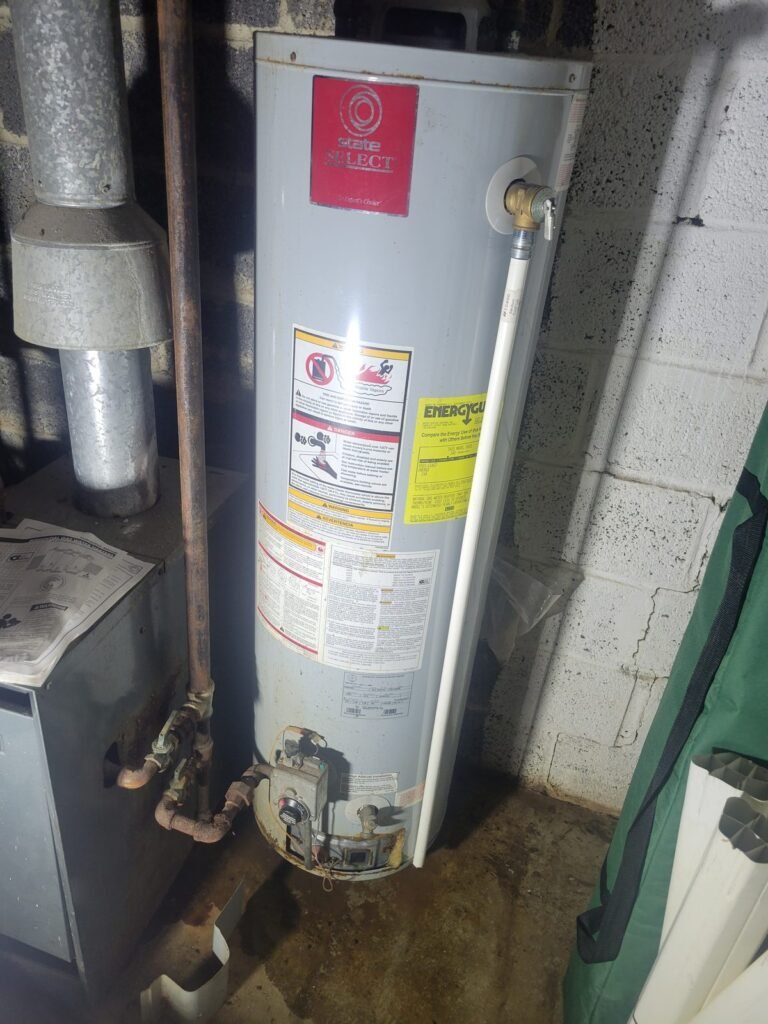
Most tank water heaters last roughly 8 to 12 years. If yours is in that range and leaking, putting money into repairs often just delays a replacement by a few months. We’ll always show you what we find and explain your options before any work starts.
How to prevent water heater leaks
- Flush the tank once a year to clear sediment that can cause overheating and corrosion at the bottom of the tank.
- Have the anode rod checked every few years. It corrodes so the tank doesn’t, and replacing it can extend the life of the heater.
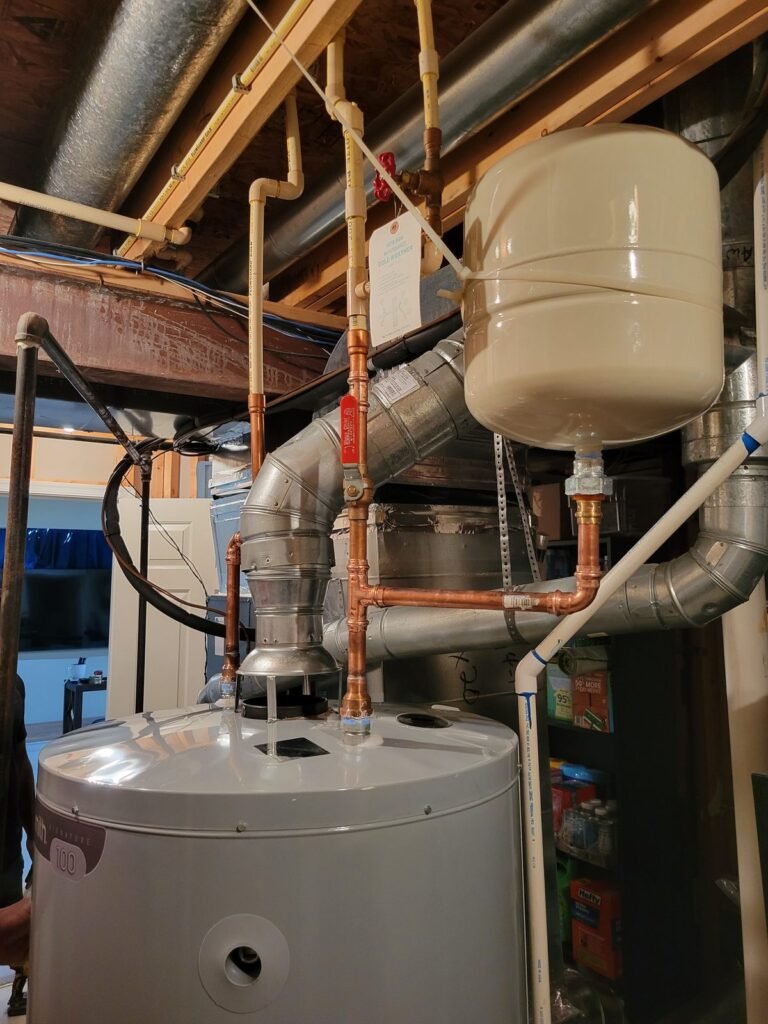
- Control water pressure and thermal expansion. High household pressure strains the tank and relief valve. A pressure reducing valve and a properly sized expansion tank help protect it.
- Use a drain pan under heaters installed in closets, attics or finished spaces, so a small leak can’t damage the floor.
- Look at the heater every few months. Moisture, rust or a damp pan are early warnings.
Water heater leaks in Maryland, DC and Northern Virginia
If your leaking water heater needs replacing, the new one typically requires a permit and an inspection. In Prince George’s and Montgomery counties, plumbing and gas permits go through WSSC Water; DC and Virginia have their own permit offices. When we replace a water heater, we pull the permit and schedule the inspection for you, and we can usually have hot water back the same day.
Key takeaways
- Turn off the power or gas and close the cold-water supply valve as soon as you see a leak.
- Leaks from fittings, supply lines, the drain valve or the relief valve are usually repairable.
- Water coming from the bottom of the tank means the tank has failed and needs replacing.
- Never cap or plug a dripping relief valve. Find out why it’s opening.
- Annual flushing, anode checks and controlling water pressure help prevent leaks.
Frequently asked questions
Can I still use my water heater if it’s leaking?
If the leak is from a fitting or valve and it’s small, you may be able to use it briefly while you arrange a repair, but it’s safest to turn off the power or gas and the water supply until it’s checked. If the tank itself is leaking, stop using it.
Why is my water heater leaking from the bottom?
Water at the bottom usually means the inner tank has corroded through, though it can also come from the drain valve or from water running down from a leak higher up. Dry the area and check the drain valve and the fittings at the top before assuming the tank has failed.
Is it normal for a water heater to drip a little?
Not usually. A gas water heater can form a little condensation when it fills with cold water, which should stop once the tank heats up. Steady dripping from a valve, fitting or the tank should be checked.
Can a leaking water heater burst?
Modern water heaters have a relief valve to prevent dangerous pressure, so a sudden burst is rare. But a corroded tank can fail and release a lot of water at once, which is why tank leaks should be treated as urgent.
Do you offer emergency service for leaking water heaters?
Yes. We answer 24/7, including nights, weekends and holidays, and can usually repair or replace a leaking water heater the same day across Maryland, DC and Northern Virginia.

Need this fixed? We serve your area
Licensed plumbers and electricians on call 24/7 in these communities and across the DMV.
Related water heaters guides
Rather have a pro handle it?
Emergencies: call now and we’ll be on the way. For everything else, send your details and we’ll call you right back.
- ✓ Free estimates on installs & upgrades
- ✓ Licensed & insured in Maryland
- ✓ Open 24/7, including weekends