
Water Heater Pressure Relief Valve: Why It Leaks and What to Do
What the temperature and pressure relief valve does, the most common reasons it drips or discharges, and how to fix the real cause safely.
In this guide
The temperature and pressure (T&P) relief valve opens to release water when the pressure or temperature inside your water heater gets too high. If it drips or discharges, the usual causes are high household water pressure, thermal expansion in a home without a working expansion tank, a thermostat set too high, or a worn valve. Never cap or plug it. Have the cause checked and, if needed, replace the valve.
The pipe running down the side of your water heater ends a few inches above the floor for a reason. It’s connected to the temperature and pressure relief valve, one of the most important safety parts in your home. When that valve starts dripping or releasing water, it’s telling you something. This guide explains what’s going on and what to do about it.
What does a water heater relief valve do?
The temperature and pressure relief valve, usually called the T&P valve, sits on the top or upper side of a tank water heater. On most residential heaters it’s designed to open if the pressure inside the tank reaches about 150 psi or the water temperature reaches about 210°F. When it opens, it releases water through the discharge pipe until conditions return to normal.
Without it, a malfunctioning heater could build up enough pressure to rupture the tank. That’s why the valve, and the pipe attached to it, should never be blocked, capped or removed.
Never cap, plug or remove the relief valve or its discharge pipe. If it’s releasing water, the fix is to find out why, not to stop it from working.
Why is my relief valve leaking?
| What you notice | Likely cause | What usually fixes it |
|---|---|---|
| Small drips now and then, especially after hot water use | Thermal expansion | Install or replace the expansion tank |
| Frequent dripping, high pressure at faucets | Household water pressure too high | Install or replace a pressure reducing valve |
| Hot water or steam discharging, very hot water at taps | Thermostat or control failure | Turn off the heater and call a pro |
| Constant trickle even when pressure is normal | Worn or debris-fouled valve | Replace the T&P valve |
Thermal expansion
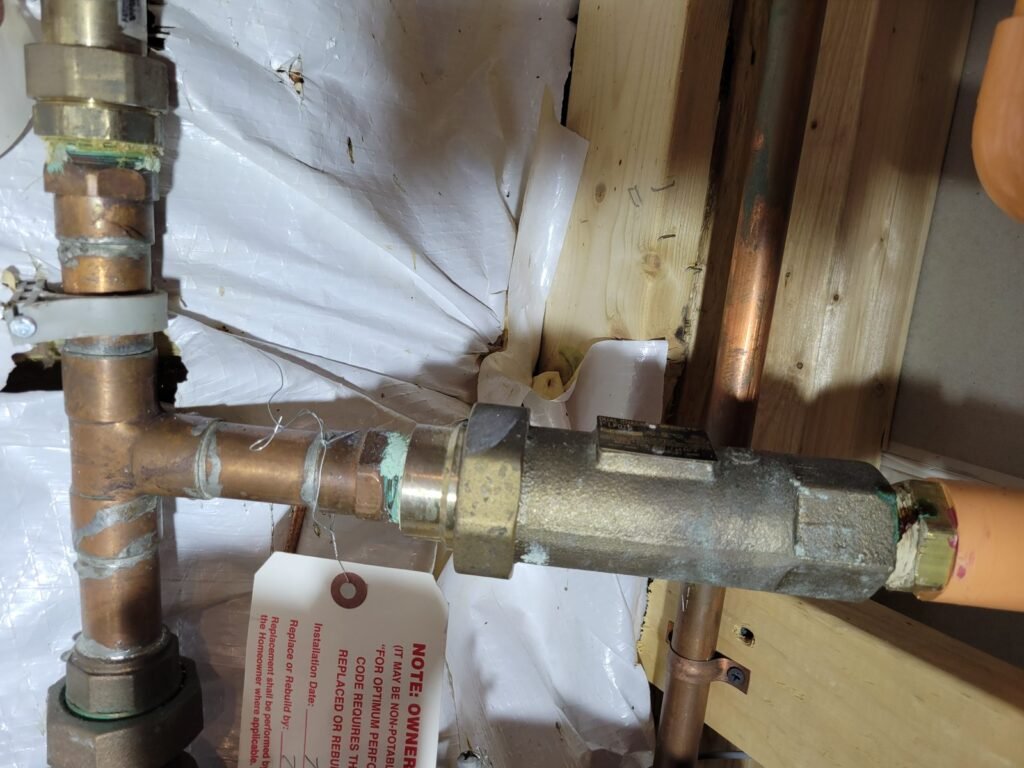
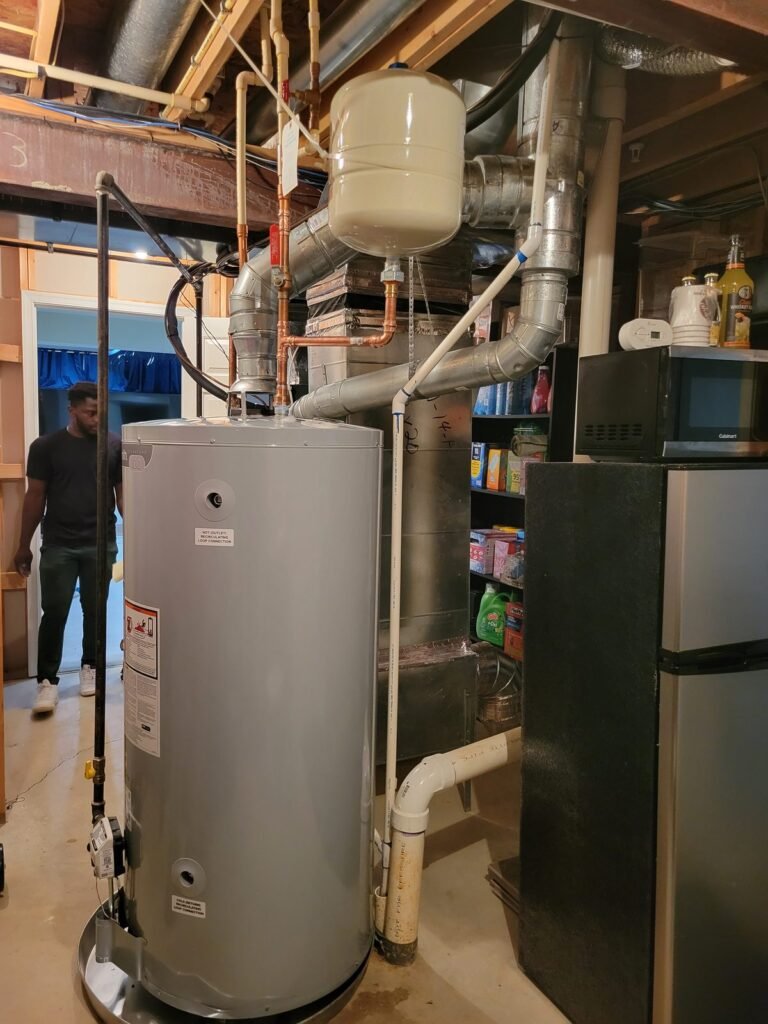
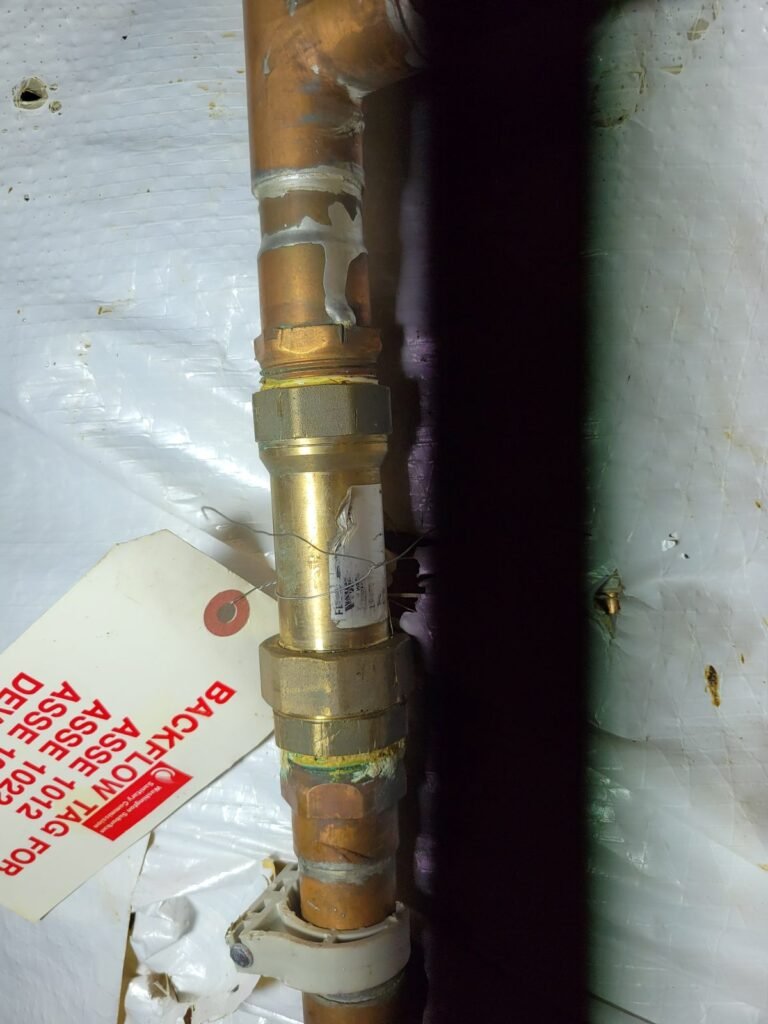
Water expands as it heats. In many homes, a check valve, backflow device or pressure reducing valve on the main line keeps that expanded water from flowing back into the city supply. With nowhere to go, the pressure in your plumbing rises every time the heater runs, and the relief valve opens to let it out. An expansion tank gives that water somewhere to go. In homes with a closed system like this, plumbing codes generally require one, and they’re a standard part of the water heater replacements we do.
High household water pressure
If the water pressure coming into your home is too high, the heater and relief valve feel it constantly. Most plumbing codes limit household pressure to 80 psi, and many homes run best somewhere between about 50 and 70 psi. A pressure reducing valve on the main line brings it down and protects every fixture in the house, not just the water heater. Signs of high pressure include banging pipes, running toilets and faucets that spray hard when opened.
An overheating water heater
If a thermostat or gas control fails, the water can get much hotter than it should. If you see the valve releasing very hot water or steam, or the water at your taps is scalding, turn off the power or gas to the heater right away and call a professional. This is the situation the valve exists for.
A worn or faulty relief valve
Relief valves wear out. Mineral deposits and debris can keep the valve from sealing completely after it opens, so it keeps trickling even when pressure and temperature are normal. Replacing the valve is a routine repair, but it should be done with the right rating for your heater.
What to do if your relief valve is leaking
- Check the water temperature. If the water at your taps is scalding or the valve is releasing steam, turn off the power (electric) or set the gas control to OFF or PILOT (gas), and call us.
- Protect the area. Put a bucket under the discharge pipe and move anything that could get wet.
- Check your thermostat setting. Around 120°F is a common, safe setting for most homes.
- Check your water pressure. An inexpensive pressure gauge from a hardware store threads onto an outdoor hose bib. A reading above 80 psi means you likely need a pressure reducing valve.
- Look for an expansion tank. If there’s a small tank above or beside the heater, it may have lost its air charge. If there isn’t one, that’s a likely cause.
If you also see water coming from anywhere else on the heater, our guide to a leaking water heater walks you through finding the source.
When to call a pro
Call us if the valve discharges hot water or steam, drips constantly, or keeps leaking after you’ve checked the temperature setting. We can test your water pressure, check or install an expansion tank and pressure reducing valve, and replace the relief valve if needed.
Should I test my relief valve?
Many manufacturers recommend testing the valve periodically by lifting its lever to let a little water out, so it doesn’t seize. The water will be hot, so keep hands and feet clear of the discharge pipe. Be aware that on an old valve, testing can sometimes cause it to keep dripping afterward because debris gets caught in the seat. If that happens, the valve needs replacing.
Is the discharge pipe installed correctly?
The pipe from the relief valve should be the same size as the valve outlet, run downward without traps or uphill sections, and end a few inches above the floor or over a suitable drain. It should never be threaded or capped at the end. We regularly find discharge pipes that are too small, missing, or routed incorrectly in older installations, and we correct them during repairs and replacements.
Relief valve problems in Maryland, DC and Northern Virginia
Many homes in our area have pressure reducing valves or backflow devices on the main line, which makes thermal expansion a common cause of relief valve dripping. Our licensed plumbers check water pressure and expansion control on every water heater call, and we install expansion tanks and pressure reducing valves across Prince George’s, Montgomery and Anne Arundel counties, DC and Northern Virginia.
Key takeaways
- The T&P relief valve is a safety device. Never cap, plug or remove it.
- Thermal expansion and high water pressure are the most common reasons it drips.
- An expansion tank and a pressure reducing valve fix the cause in most homes.
- Hot water or steam from the valve means the heater may be overheating. Shut it off and call a pro.
- A valve that keeps trickling at normal pressure usually needs replacing.
Frequently asked questions
Is a dripping relief valve dangerous?
The drip itself isn’t dangerous. It means the valve is doing its job. But it’s a sign of high pressure, thermal expansion, overheating or a worn valve, and the cause should be checked, especially if the water is very hot.
Can I replace a water heater relief valve myself?
It’s possible for experienced DIYers, but the tank has to be depressurized and partly drained, and the new valve must match the heater’s pressure and temperature rating. Because it’s a safety device, we recommend having a licensed plumber do it.
Why does my relief valve drip at night?
Overnight, nobody is using water, so pressure from thermal expansion or high street pressure builds up in the plumbing. That’s a classic sign you need an expansion tank or a pressure reducing valve.
Do I need an expansion tank?
If your home has a check valve, backflow preventer or pressure reducing valve on the main line, your plumbing is a closed system and an expansion tank is generally required with a tank water heater.
What pressure should my home’s water be?
Most plumbing codes cap household pressure at 80 psi. Many homes do well between about 50 and 70 psi.

Need this fixed? We serve your area
Licensed plumbers and electricians on call 24/7 in these communities and across the DMV.
Related water heaters guides
Rather have a pro handle it?
Emergencies: call now and we’ll be on the way. For everything else, send your details and we’ll call you right back.
- ✓ Free estimates on installs & upgrades
- ✓ Licensed & insured in Maryland
- ✓ Open 24/7, including weekends