
What Affects the Cost of Replacing a Water Heater?
The factors that decide what a water heater replacement costs, from size and fuel type to venting, code upgrades and permits, so you can compare quotes with confidence.
In this guide
The cost of replacing a water heater depends mainly on the type (tank, tankless or heat pump), fuel (gas or electric), size, how hard it is to reach, any venting, gas line or electrical changes, required code upgrades like an expansion tank, and the permit and inspection. Comparing quotes line by line on these factors is the best way to see whether you’re getting the full job or just the heater.
“How much does a new water heater cost?” is one of the first questions homeowners ask, and the honest answer is that it depends. Two quotes for the “same” water heater can look very different because one includes things the other leaves out. This guide breaks down what actually drives the price, so you know what to ask and how to compare quotes.
The biggest cost factors
| Factor | Why it matters |
|---|---|
| Type of water heater | Standard tank heaters cost the least up front. Tankless and heat pump heaters cost more to buy and install but can save energy over time. |
| Gas or electric | Gas heaters need a gas connection and venting; electric heaters need the right circuit. Switching fuel types adds work. |
| Size and capacity | Larger tanks and higher-output units cost more. Sizing should match your household, not just the old heater. |
| Location and access | Attics, tight closets, crawl spaces and narrow stairs take more time and labor than an open basement. |
| Venting changes | Gas heaters must vent properly. Upgrading to a power-vent or tankless unit often requires new vent piping. |
| Code upgrades | An expansion tank, a correct relief valve discharge pipe, a drain pan, or updated gas or water connections may be required. |
| Permit and inspection | Most water heater replacements need a permit and inspection. |
| Removal of the old heater | Draining, disconnecting and hauling away the old unit is part of a complete job. |
| Timing | An emergency replacement on a weekend night is a different job from a planned upgrade. |
| Brand and warranty | Longer tank warranties and higher-efficiency models usually cost more. |
Tank, tankless or heat pump
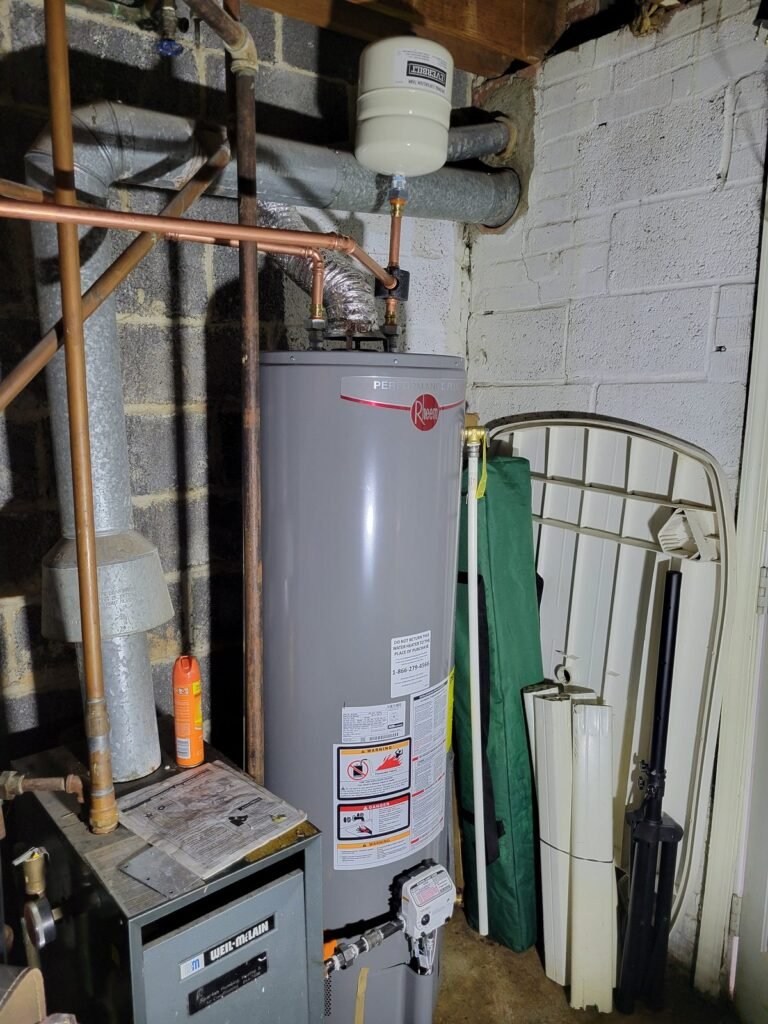
A like-for-like replacement of a standard gas or electric tank is usually the most affordable option, because the existing connections, venting and circuit can often be reused. Tankless water heaters typically cost more because of the unit itself and the installation work: many need a larger gas line, new venting and a new mounting location. Heat pump water heaters cost more up front too, but they’re far more efficient than standard electric tanks, and utility rebates can offset part of the price.
Venting, gas lines and electrical work
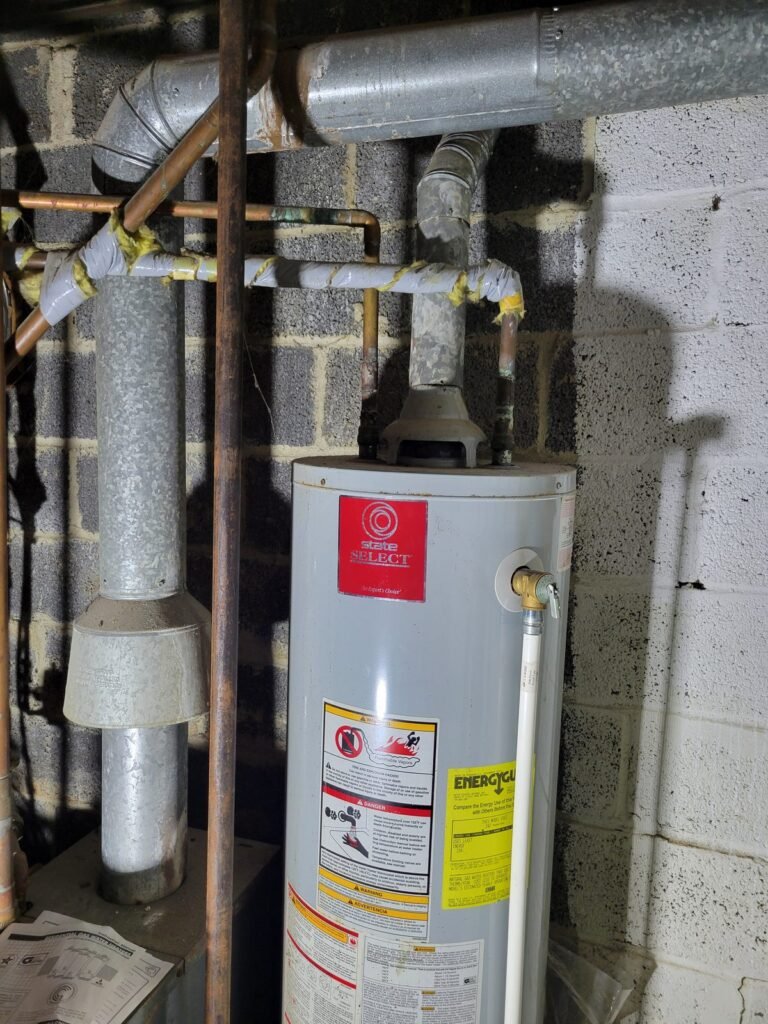
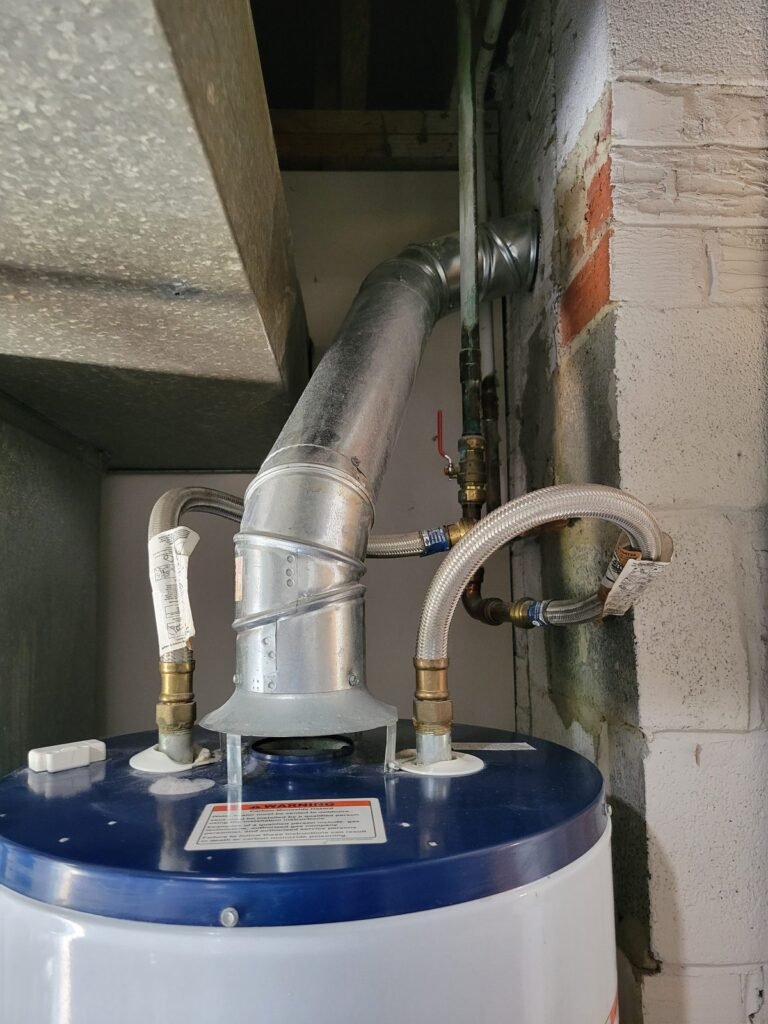
Gas water heaters have to exhaust combustion gases safely. If the existing vent is damaged, undersized or doesn’t meet current code, it needs correcting. Moving from a standard tank to a power-vent or tankless model usually means new vent piping. On the electrical side, a larger electric heater, a heat pump unit or an electric tankless heater may need a new or upgraded circuit, and sometimes more panel capacity.
Code upgrades and permits
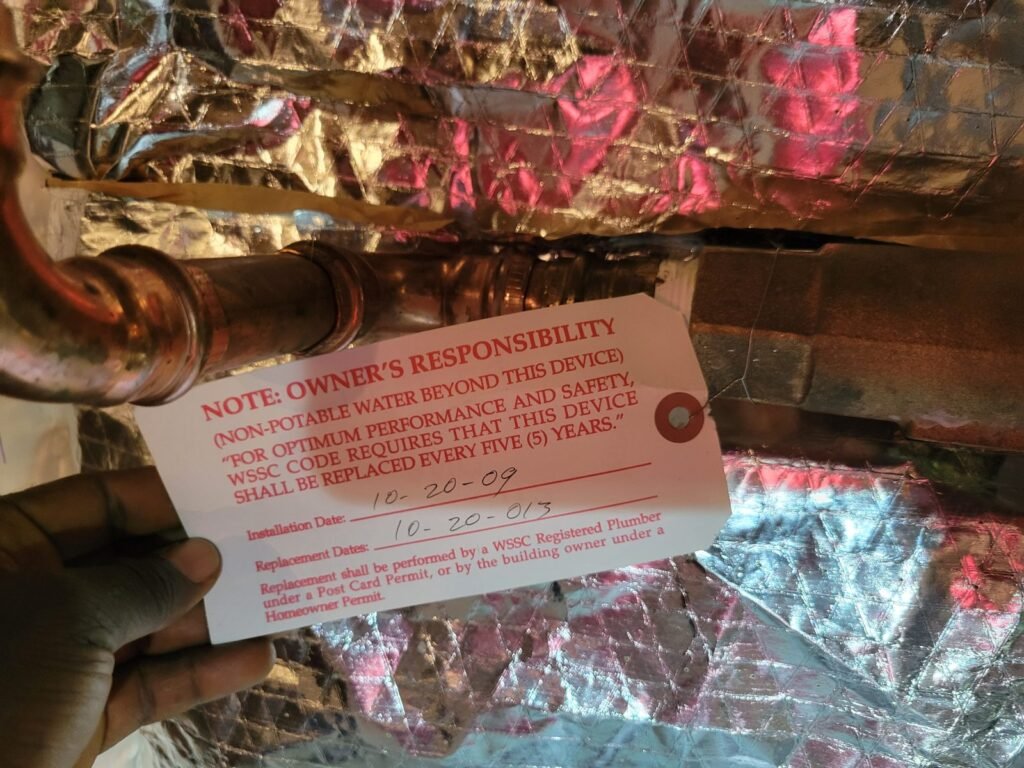
Plumbing codes change over the life of a water heater, so a replacement often brings the installation up to current standards. Common items include an expansion tank in homes with a pressure reducing valve or check valve on the main line, a properly sized and routed relief valve discharge pipe, a drain pan where a leak could cause damage, and new shut-off valves and connectors. In Prince George’s and Montgomery counties, plumbing and gas permits go through WSSC Water; DC and Virginia have their own permit offices. Make sure your quote includes the permit and inspection.
How to compare water heater quotes
- Compare the same type and size. Check the gallon capacity (or flow rate for tankless), fuel type and efficiency rating.
- Check what’s included. Permit, inspection, expansion tank, new valves and connectors, venting work, haul-away and cleanup.
- Ask about the warranty. Both the manufacturer’s tank and parts warranty and the installer’s labor warranty.
- Ask who does the work. Gas, venting and electrical work should be done by licensed professionals.
- Get the price in writing before work starts. An upfront price avoids surprises.
When to call a pro
Want a clear, upfront quote? We’ll look at your current setup, explain your options for tank, tankless or heat pump, and give you a written price that includes the permit, code upgrades and haul-away before any work starts. Estimates are free.
When does repair make more sense?
If your heater is relatively young and the problem is a single part, like an element, thermostat, thermocouple or relief valve, a repair is usually the better value. If the tank is leaking, the heater is more than about 10 years old, or it needs a major part like a gas control valve, replacement usually makes more sense. Our guides to leaking water heaters, no hot water and electric heaters that won’t heat can help you figure out where you stand.
Water heater replacement in Maryland, DC and Northern Virginia
We replace gas, electric, tankless and heat pump water heaters across Prince George’s, Montgomery and Anne Arundel counties, Washington, DC and Northern Virginia, often the same day. Every quote is upfront and in writing, and we handle the permit and inspection for you.
Key takeaways
- Type, fuel, size and access are the biggest cost drivers.
- Tankless and heat pump heaters cost more up front but can save energy over time.
- Venting, gas line and electrical changes add to the job.
- Code upgrades like an expansion tank and the permit are part of a complete replacement.
- Compare quotes line by line, not just by the bottom number.
Frequently asked questions
Why do water heater quotes vary so much?
Quotes differ in what they include: permits, expansion tanks, venting and gas line work, new valves, haul-away and warranty. Comparing those line by line explains most of the difference.
Is a tankless water heater worth the extra cost?
It can be if you want endless hot water, have limited space or plan to stay in your home long enough to benefit from lower energy use. It depends on your gas line, venting and how your household uses hot water.
Do I need a permit to replace a water heater?
In most of our service area, yes. In Prince George’s and Montgomery counties, plumbing and gas permits go through WSSC Water. We pull the permit and schedule the inspection.
Does replacing a water heater include removing the old one?
It should. Draining, disconnecting and hauling away the old heater is part of a complete replacement. Check that your quote includes it.
Are there rebates for efficient water heaters?
Utilities and programs sometimes offer rebates for high-efficiency models like heat pump water heaters. Availability changes, so check with your utility before you buy.

Need this fixed? We serve your area
Licensed plumbers and electricians on call 24/7 in these communities and across the DMV.
Related water heaters guides
Rather have a pro handle it?
Emergencies: call now and we’ll be on the way. For everything else, send your details and we’ll call you right back.
- ✓ Free estimates on installs & upgrades
- ✓ Licensed & insured in Maryland
- ✓ Open 24/7, including weekends