
Water Heater Expansion Tanks: Do You Need One in Maryland?
What a thermal expansion tank does, when plumbing code requires one, signs yours has failed, and why so many Maryland homes need one.
In this guide
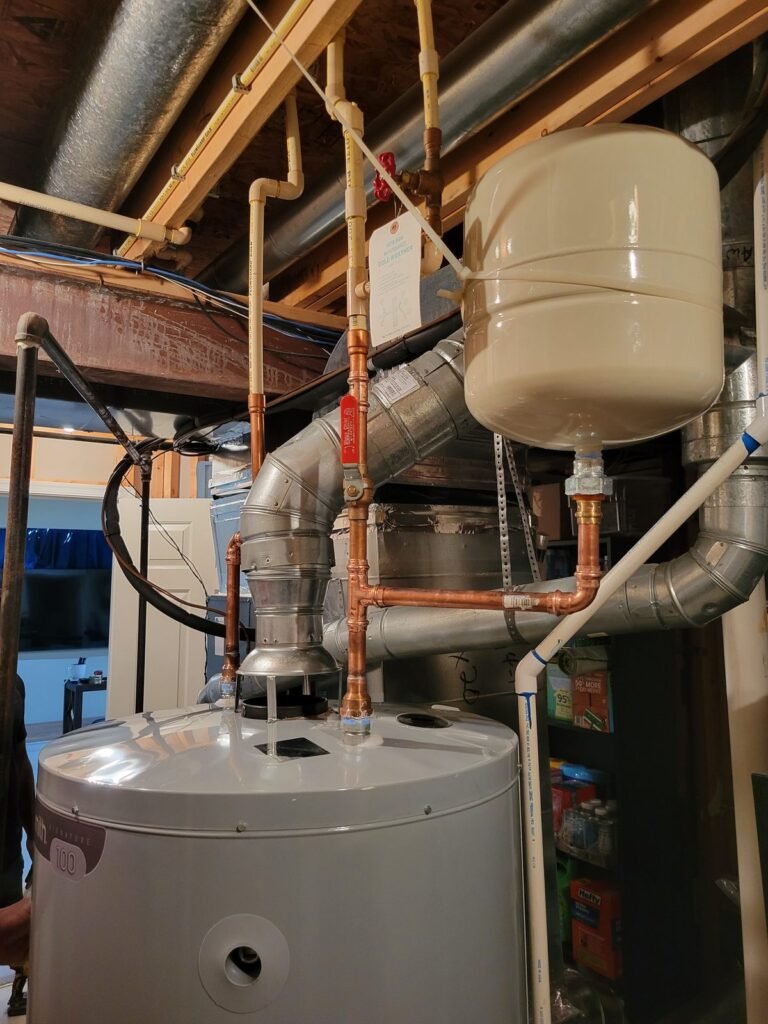
An expansion tank is a small tank mounted on the cold-water line near your water heater that absorbs the extra volume created when water heats up. You generally need one if your home has a pressure reducing valve, check valve or backflow preventer on the main line, because those create a “closed” system where expanding water has nowhere to go. Without one, pressure spikes can make the relief valve drip and shorten the life of your heater and fixtures.
If you’ve had a water heater replaced recently, you may have noticed a small, round tank installed near it. That’s a thermal expansion tank, and in many Maryland homes it isn’t optional. Here’s what it does, when you need one, and how to tell if yours has stopped working.
What does an expansion tank do?
Water expands as it heats. A 40- or 50-gallon tank of water heated from cold gains a small but real amount of volume every time the heater runs. In an open system, that extra water simply pushes back into the city supply. But many homes have a device on the main line that stops water from flowing backward, so the expanded water has nowhere to go and the pressure in your plumbing climbs.
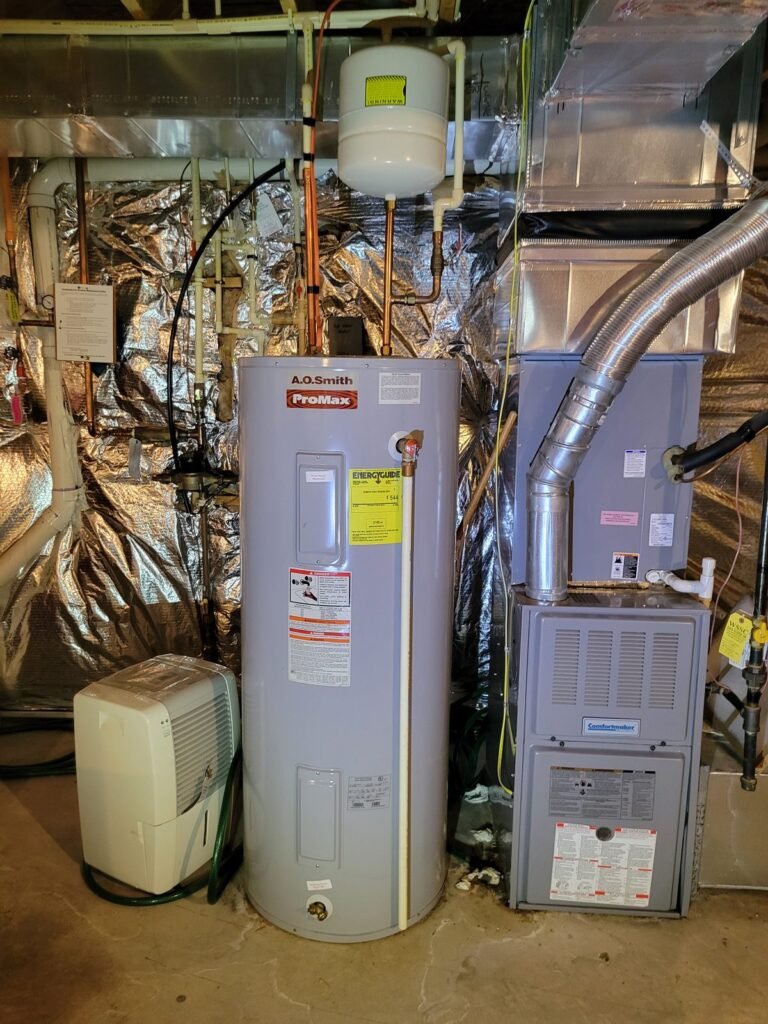
An expansion tank solves this. Inside is a rubber diaphragm or bladder with an air cushion on one side. As pressure rises, water pushes into the tank and compresses the air, absorbing the expansion and keeping household pressure steady.
Do you need an expansion tank?
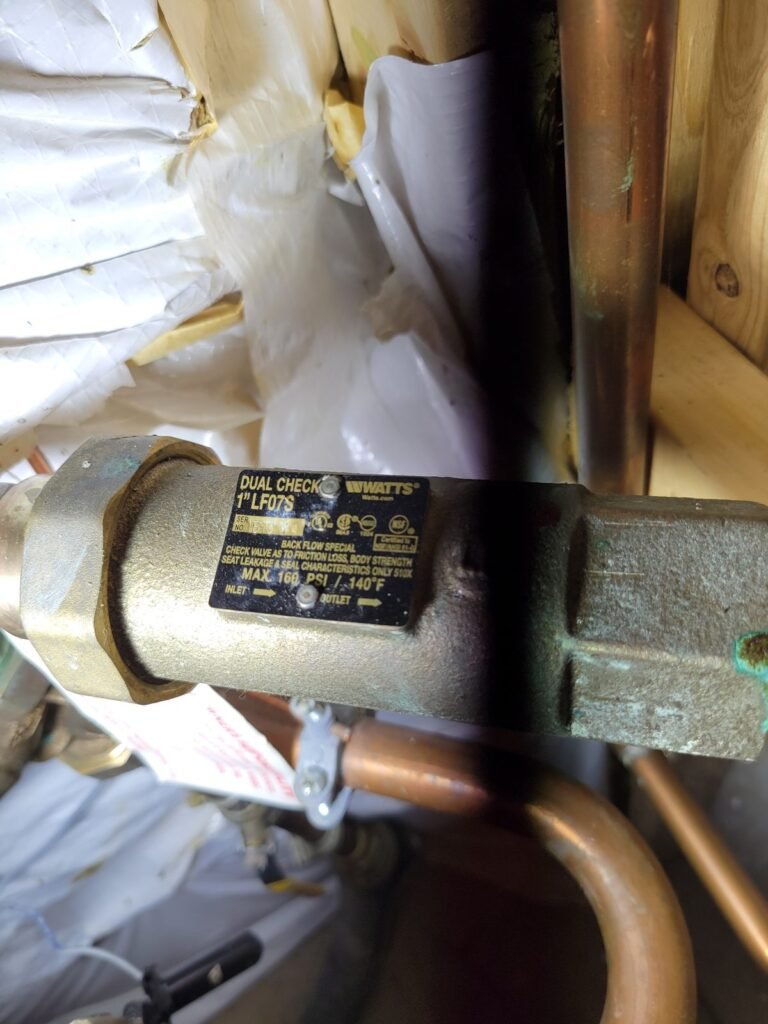
Plumbing codes used across our area generally require thermal expansion control when a water heater is installed on a closed system. Your system is likely closed if you have any of these on the main water line:
- A pressure reducing valve (PRV), common in homes where street pressure is high
- A check valve at or near the meter
- A backflow preventer
Many Maryland homes on WSSC Water and other utilities have a pressure reducing valve, which is why we install expansion tanks on so many of our water heater replacements. If you’re not sure whether your system is closed, a plumber can tell you in a few minutes.
Signs you need an expansion tank, or yours has failed
- The relief valve drips, especially overnight or after the heater runs. See our guide to why relief valves leak.
- Pressure swings at faucets, or toilets that run or refill on their own.
- Banging pipes when fixtures close.
- The expansion tank is full of water. Tap it: a working tank sounds hollow at the top. Press the air valve stem briefly; if water comes out instead of air, the bladder has failed.
- Rust or leaks on the expansion tank itself.
Don’t ignore a dripping relief valve. It’s a sign pressure is building in your system. Never cap or plug the valve or its discharge pipe.
How expansion tanks are sized and installed
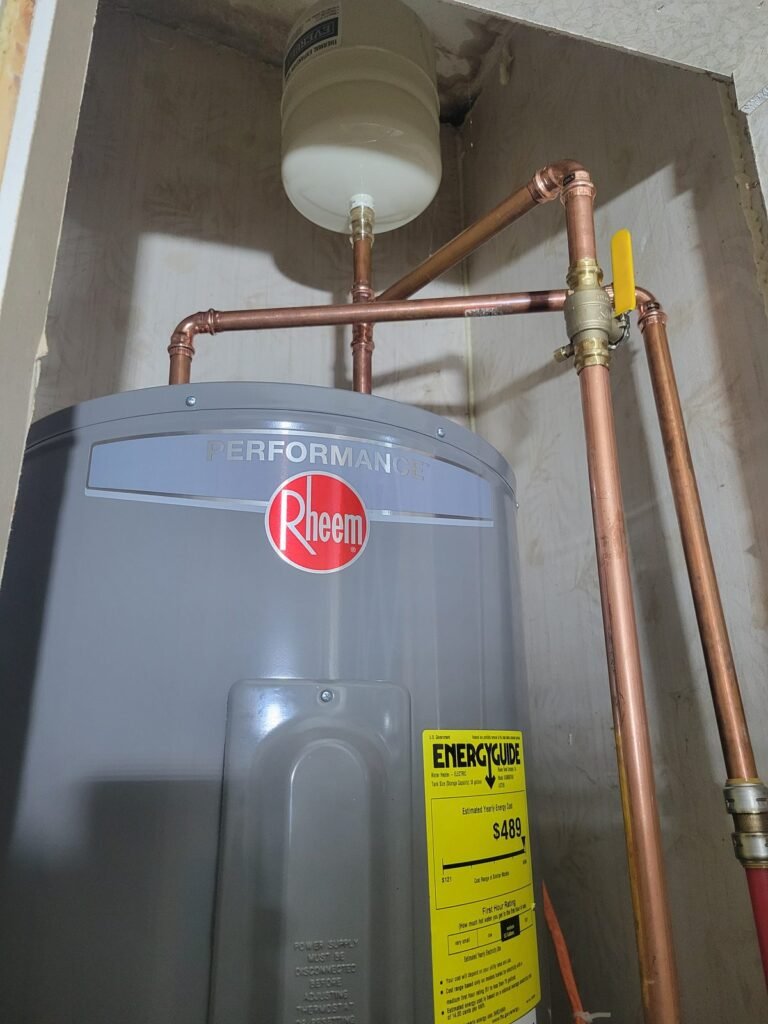
Expansion tanks are sized for the water heater’s capacity and your home’s incoming water pressure. Before installation, the tank’s air charge is set to match the household water pressure; if it’s left at the factory setting, the tank won’t work as intended. The tank is installed on the cold-water supply line near the heater and should be properly supported, because a tank full of water is heavy.
How long do expansion tanks last?
Many expansion tanks last somewhere in the range of 5 to 10 years, often less than the water heater itself. It’s smart to have the tank checked when the water heater is serviced and to replace both together if the tank is old.
When to call a pro
Call us if your relief valve drips, your water pressure seems high, or your expansion tank is waterlogged or leaking. We’ll test your pressure, set or replace the expansion tank, and add a pressure reducing valve if needed.
Expansion tanks and water heater replacements
When we replace a water heater on a closed system, an expansion tank is part of the job, sized and pre-charged for your home. It’s one of the code items that can make two water heater quotes look different, which we explain in what affects the cost of replacing a water heater. For a look at real installs, see our recent Bowie replacements.
Key takeaways
- Expansion tanks absorb the extra volume water gains as it heats.
- You generally need one if you have a pressure reducing valve, check valve or backflow preventer.
- A dripping relief valve and pressure swings are common signs of missing or failed expansion control.
- The tank’s air charge must be set to match your home’s water pressure.
- Expansion tanks often need replacing before the water heater does.
Frequently asked questions
Is an expansion tank required in Maryland?
Plumbing codes generally require thermal expansion control when a water heater is on a closed system, such as a home with a pressure reducing valve, check valve or backflow preventer. That describes many homes in our area.
How do I know if my expansion tank is bad?
A failed tank usually sounds solid rather than hollow when tapped, and water comes out of the air valve instead of air. Relief valve dripping and pressure swings are other signs.
Where should an expansion tank be installed?
On the cold-water supply line near the water heater, properly supported, with its air charge set to match your household water pressure.
Can I install an expansion tank myself?
It involves cutting into the water line, setting the air charge correctly and supporting the tank. Many homeowners prefer a licensed plumber, especially because it’s often part of a permitted water heater installation.
Do tankless water heaters need expansion tanks?
Tankless heaters store very little water, so thermal expansion is much smaller. Requirements can vary, so we check each installation.

Need this fixed? We serve your area
Licensed plumbers and electricians on call 24/7 in these communities and across the DMV.
Related water heaters guides
Rather have a pro handle it?
Emergencies: call now and we’ll be on the way. For everything else, send your details and we’ll call you right back.
- ✓ Free estimates on installs & upgrades
- ✓ Licensed & insured in Maryland
- ✓ Open 24/7, including weekends