
Water Heater Code Requirements: Drain Pans, Relief Valves, Garages & More
The plumbing code items that apply to most water heater installations, from relief valve piping and expansion control to drain pans, garage installs and venting.
In this guide
Most water heater installations must have a properly piped temperature and pressure relief valve, thermal expansion control on closed systems, a shut-off valve on the cold supply, correct venting and combustion air for gas models, and a drain pan where a leak could damage the building. Gas heaters in garages generally must be elevated or be flammable-vapor-ignition-resistant. Exact rules depend on the codes adopted locally, and a permit and inspection confirm the work.
Water heater codes exist for good reasons: to prevent scalds, explosions, carbon monoxide and water damage. They’re also why a professional installation includes more than the heater itself. Here are the requirements that apply to most homes. Exact details depend on the plumbing, mechanical and fuel gas codes your jurisdiction has adopted, so always confirm locally.
Temperature and pressure relief valve
- Every tank water heater needs a properly rated T&P relief valve.
- The discharge pipe must be the same size as the valve outlet, run by gravity without traps, and end close to the floor or over a suitable drain.
- It must never be capped, threaded at the end or reduced in size.
More detail: why relief valves leak.
Thermal expansion control
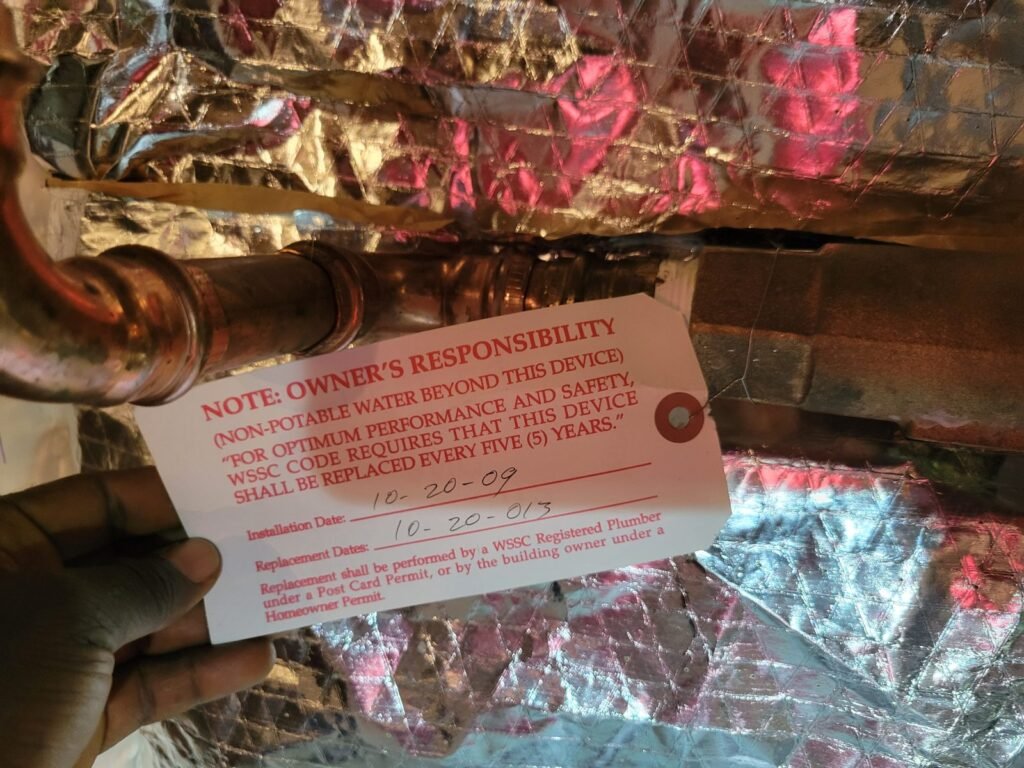
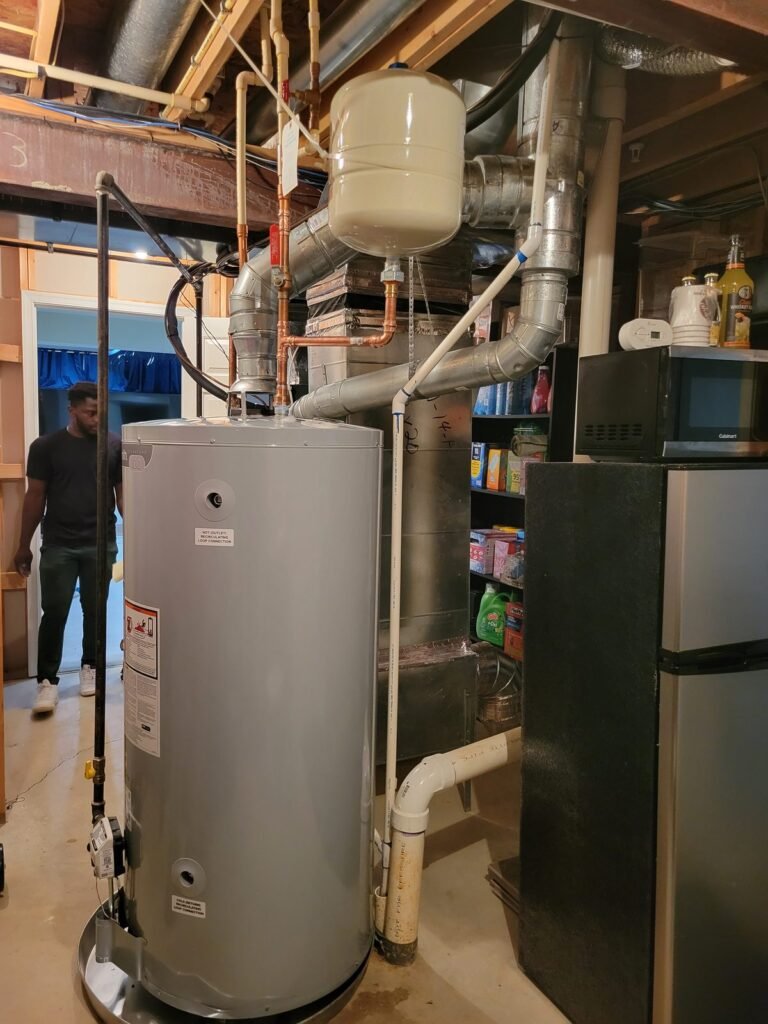
Where a pressure reducing valve, check valve or backflow preventer makes the plumbing a closed system, codes generally require an expansion tank or other means to control thermal expansion.
Shut-off valve
A shut-off valve on the cold-water supply to the heater lets you isolate it for service or in an emergency.
Drain pans
Codes generally require a drain pan under water heaters installed where a leak would cause damage, such as attics, upper floors and finished spaces, with the pan piped to an appropriate drain or location. Even where not required, a pan is cheap insurance.
Gas water heaters: venting and combustion air
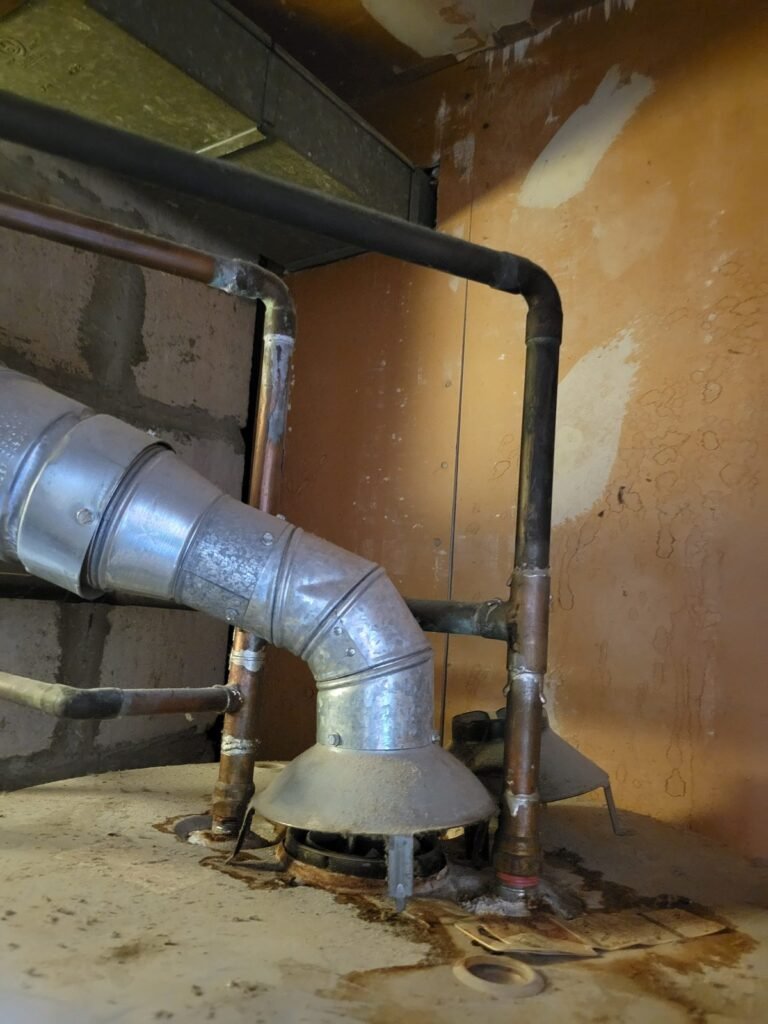
- The vent must be the correct type and size, sloped upward, properly connected and supported.
- The heater needs enough combustion air; closets may need louvered doors or air openings.
- Clearances to combustibles must match the manufacturer’s instructions.
- A sediment trap (drip leg) on the gas supply is commonly required.
Water heaters in garages
Gas heaters and other appliances with an ignition source installed in garages generally must be elevated so the ignition source is at least 18 inches above the floor, unless the heater is listed as flammable-vapor-ignition-resistant. Heaters should also be protected from vehicle impact.
Permits and inspection
Water heater replacements typically need a permit and inspection. In Prince George’s and Montgomery counties, plumbing and gas permits go through WSSC Water; DC and Virginia jurisdictions have their own permit offices. The inspection confirms the work meets the adopted codes.
Unpermitted installations can cause problems later, from failed home inspections when you sell to insurance questions after a leak. A permitted installation protects you.
Want it done to code?
Every water heater we install is permitted, inspected and brought up to current code, including the expansion tank, relief valve piping, drain pan and venting it needs. Estimates are free.
For how code items affect pricing, see what affects the cost of replacing a water heater.
Key takeaways
- Relief valve discharge piping must be full size, unobstructed and never capped.
- Closed plumbing systems need thermal expansion control.
- Drain pans are generally required where a leak would cause damage.
- Gas heaters need correct venting, combustion air and clearances.
- Garage gas heaters generally must be elevated unless FVIR-listed.
Frequently asked questions
Is a drain pan required under a water heater?
Generally where a leak would cause damage, such as attics, upper floors and finished spaces. Check your local code; even when optional, a pan is a good idea.
Do water heaters in garages need to be raised?
Gas heaters and other appliances with an ignition source generally must be elevated 18 inches unless they’re listed as flammable-vapor-ignition-resistant.
Do I need a permit to replace a water heater?
In most of our service area, yes. In Prince George’s and Montgomery counties, plumbing and gas permits go through WSSC Water.
Are earthquake straps required in Maryland?
Seismic strapping is required in some regions of the country but generally isn’t a standard requirement in Maryland. Follow local code and the manufacturer’s instructions.

Need this fixed? We serve your area
Licensed plumbers and electricians on call 24/7 in these communities and across the DMV.
Related water heaters guides
Rather have a pro handle it?
Emergencies: call now and we’ll be on the way. For everything else, send your details and we’ll call you right back.
- ✓ Free estimates on installs & upgrades
- ✓ Licensed & insured in Maryland
- ✓ Open 24/7, including weekends