
Atmospheric vs. Power Vent vs. Direct Vent Water Heaters Explained
How gas water heaters vent their exhaust, the pros and cons of each venting type, and the venting problems we find most often in older homes.
In this guide
Atmospheric (natural draft) gas water heaters vent hot exhaust up through a chimney or metal vent and need no electricity. Power vent heaters use a fan to push exhaust through PVC pipe, often out a side wall, and need an outlet. Direct vent heaters draw combustion air from outside and exhaust through a sealed sidewall vent, without a fan. The right choice depends on where the heater is, how far it is from an outside wall or chimney, and what your current venting allows.
Every gas water heater produces exhaust that has to leave your home safely. How it does that, the venting type, affects where the heater can go, what it costs to install and whether it needs electricity. It’s also one of the most common reasons two water heater quotes look different.
The three main venting types
| Atmospheric | Power vent | Direct vent | |
|---|---|---|---|
| How it vents | Hot exhaust rises naturally up a chimney or metal vent | A fan pushes exhaust out through PVC or similar pipe | Sealed system: outside air in, exhaust out through a wall vent |
| Needs electricity | No | Yes | Usually no |
| Vent routing | Must rise vertically to a chimney or roof | Can run horizontally out a side wall, longer distances | Short runs, usually through a nearby wall |
| Upfront cost | Lowest | Higher | Higher |
| Best for | Homes with a good existing chimney or vent | Basements far from a chimney, or no usable chimney | Tight spaces near an outside wall |
Atmospheric (natural draft)
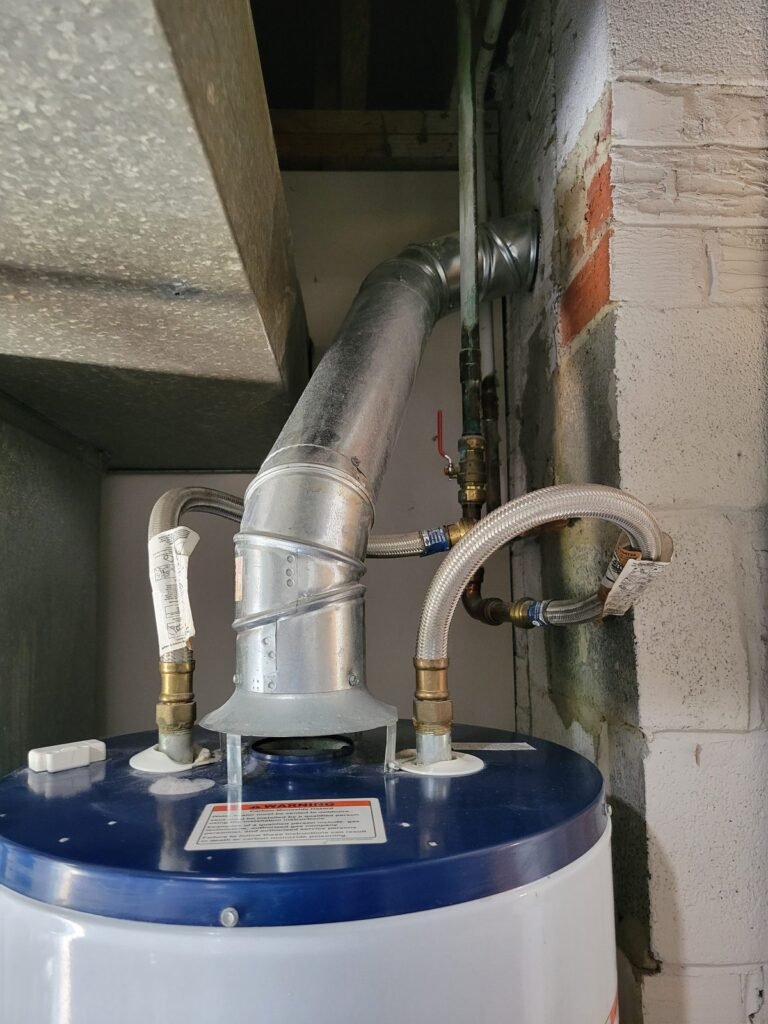
This is the most common type in older homes. Exhaust rises through a draft hood into a metal vent or masonry chimney. It’s simple and works without power, but it depends on a correctly sized, unobstructed vent and enough combustion air. Problems like backdrafting can push exhaust into the home, which is why venting is checked on every install.
Power vent
A fan on top of the heater pushes cooler exhaust through plastic vent pipe, which can run sideways out a wall and over longer distances. That makes it a good solution when there’s no usable chimney. It needs an electrical outlet, the fan makes some noise, and the heater won’t run during a power outage.
Direct vent
A direct vent heater is sealed from the room: it pulls combustion air from outside and sends exhaust out, usually through a single wall termination. It’s a good option in small spaces near an exterior wall, and many models need no electricity, but vent length is limited.
The “orphaned water heater” problem
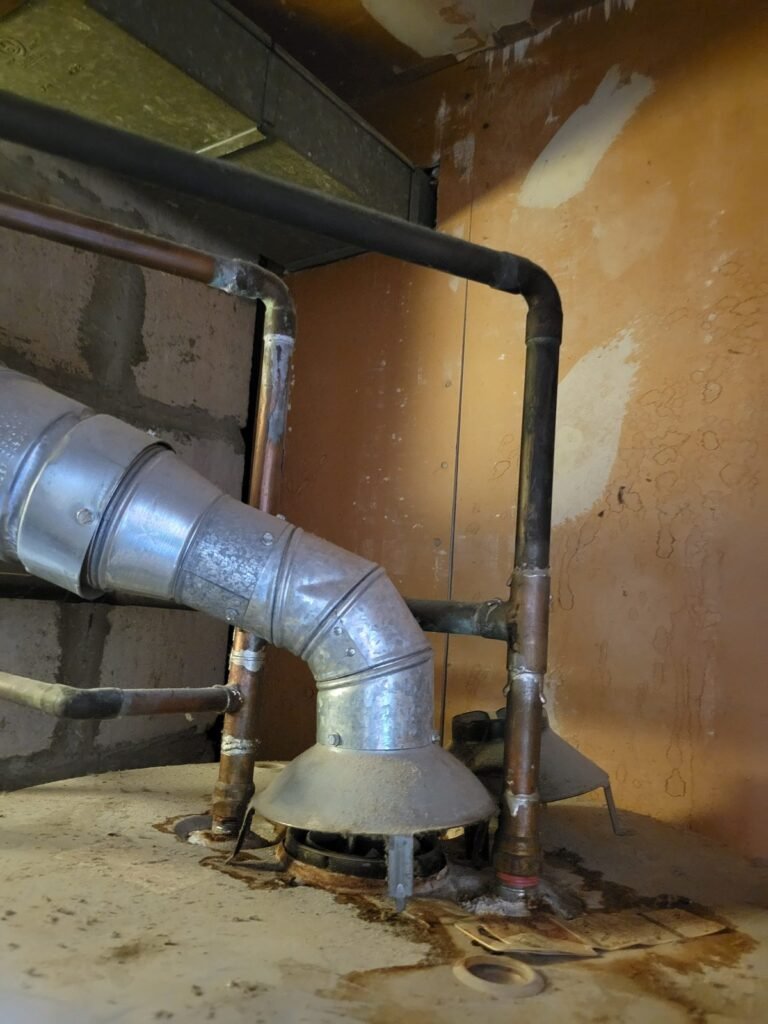
A common situation in older homes: the furnace and water heater once shared a masonry chimney. When the old furnace is replaced with a high-efficiency model that vents through PVC, the water heater is left alone in a chimney that’s now too large for it. That can cause poor draft and condensation damage. The fix may be a properly sized chimney liner, or switching the water heater to a power vent or direct vent model.
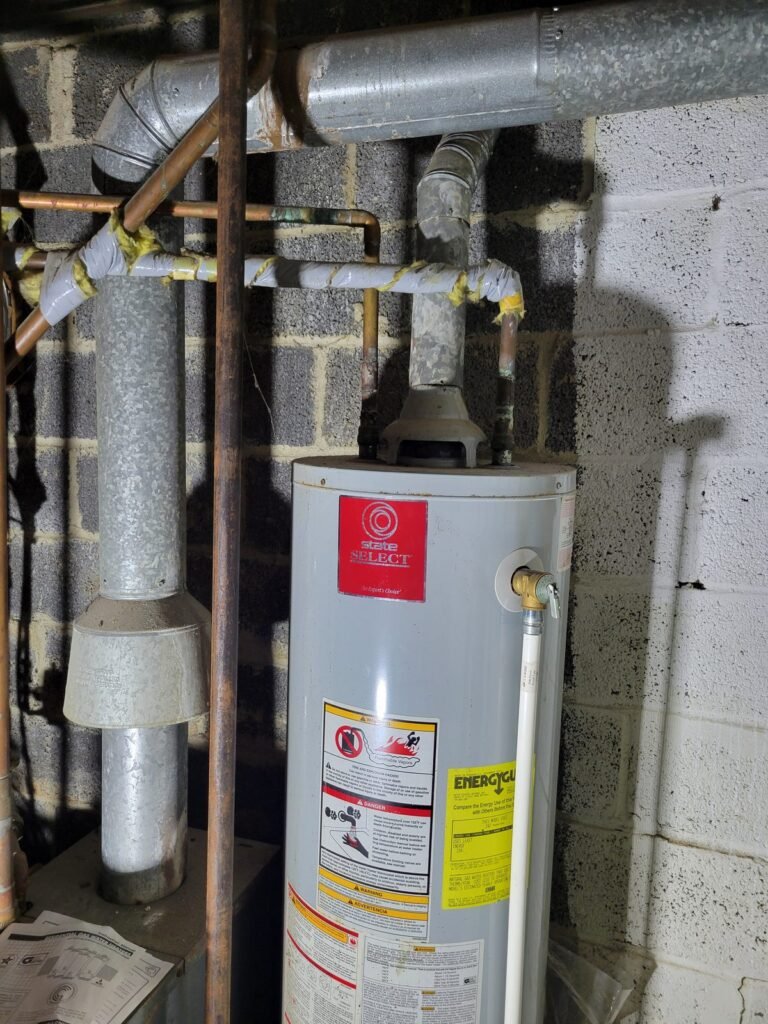
Signs of a venting problem: soot or scorch marks near the draft hood, a rusty or disconnected vent pipe, moisture on the vent, or exhaust smell. Make sure you have working carbon monoxide alarms, and call a pro if you see any of these.
Not sure which venting you need?
We check venting on every gas water heater we install or service, and we install atmospheric, power vent and direct vent models, including chimney liners and new vent runs when needed.
Related: water heater code requirements and what affects replacement cost.
Key takeaways
- Atmospheric heaters vent naturally up a chimney and need no power.
- Power vent heaters use a fan and can vent sideways over longer runs.
- Direct vent heaters are sealed and vent through a nearby wall.
- An “orphaned” water heater in an oversized chimney may need a liner or a new vent type.
- Soot, rust or exhaust smell near the vent needs prompt attention.
Frequently asked questions
What’s the difference between power vent and direct vent?
A power vent uses a fan to push exhaust out and draws combustion air from the room. A direct vent is sealed, takes combustion air from outside and usually vents without a fan.
Does a power vent water heater need electricity?
Yes. The fan needs power, so it won’t heat water during an outage.
Can I replace an atmospheric water heater with a power vent?
Usually, yes. It needs an outlet and new vent piping to the outside, which can solve chimney problems.
Why does my water heater need a chimney liner?
When a furnace is upgraded and no longer uses the chimney, the water heater may be left in a flue too large for it, causing poor draft and condensation. A liner sized for the heater fixes that.

Need this fixed? We serve your area
Licensed plumbers and electricians on call 24/7 in these communities and across the DMV.
Related water heaters guides
Rather have a pro handle it?
Emergencies: call now and we’ll be on the way. For everything else, send your details and we’ll call you right back.
- ✓ Free estimates on installs & upgrades
- ✓ Licensed & insured in Maryland
- ✓ Open 24/7, including weekends