
How Long Do Water Heaters Last? 7 Signs Yours Is Failing
Typical lifespans for tank, tankless and heat pump water heaters, the warning signs that yours is near the end, and how to make it last longer.
In this guide
Most tank water heaters last about 8 to 12 years, while tankless units often last 20 years or more with regular descaling. Warning signs that a heater is failing include age past 10 years, rusty hot water, rumbling or popping, moisture or rust around the base, hot water that runs out faster than it used to, and repairs becoming frequent. Annual flushing and checking the anode rod help a heater reach the upper end of its lifespan.
Water heaters rarely fail at a convenient time. Knowing roughly how old yours is, and what the early warning signs look like, lets you plan a replacement on your schedule instead of after a cold shower or a flooded basement.
Typical water heater lifespan
| Type | Typical lifespan | What shortens it |
|---|---|---|
| Gas tank | About 8 to 12 years | Sediment, high water pressure, a depleted anode rod |
| Electric tank | About 8 to 12 years, sometimes longer | Sediment, element failures, hard water |
| Tankless | Often 20 years or more | Mineral scale when it isn’t descaled |
| Heat pump (hybrid) | Similar to or longer than a standard tank | Skipped maintenance, poor installation location |
These are typical ranges, not guarantees. Water quality, how hard the heater works and how well it’s maintained all make a difference.
How old is my water heater?
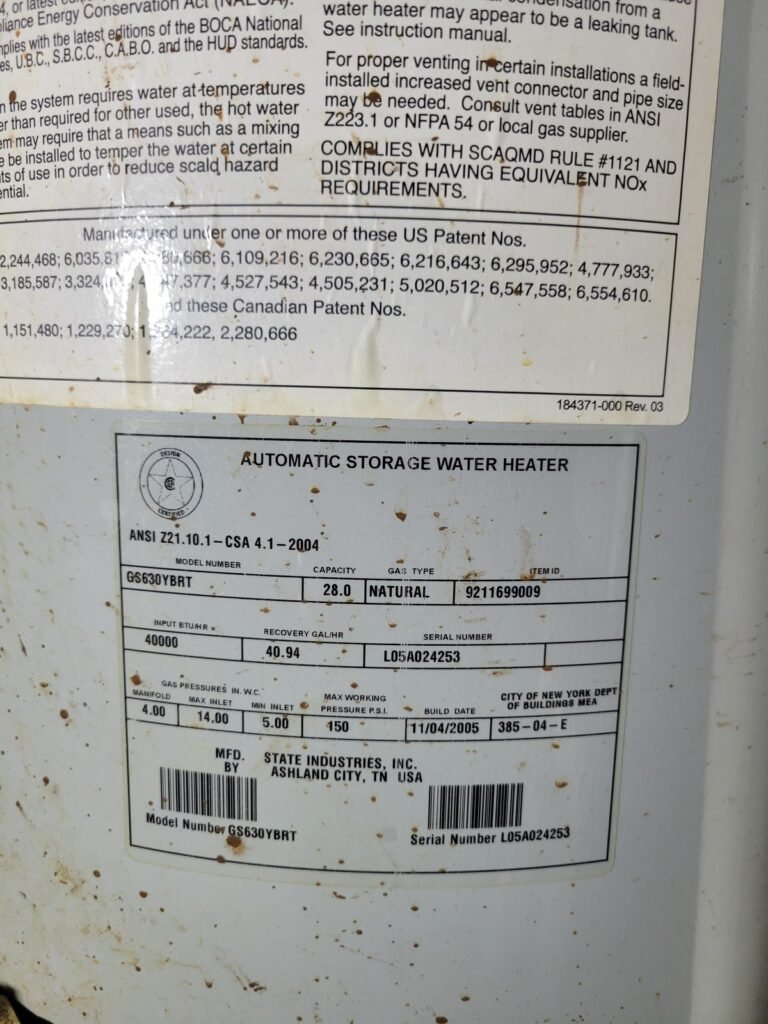
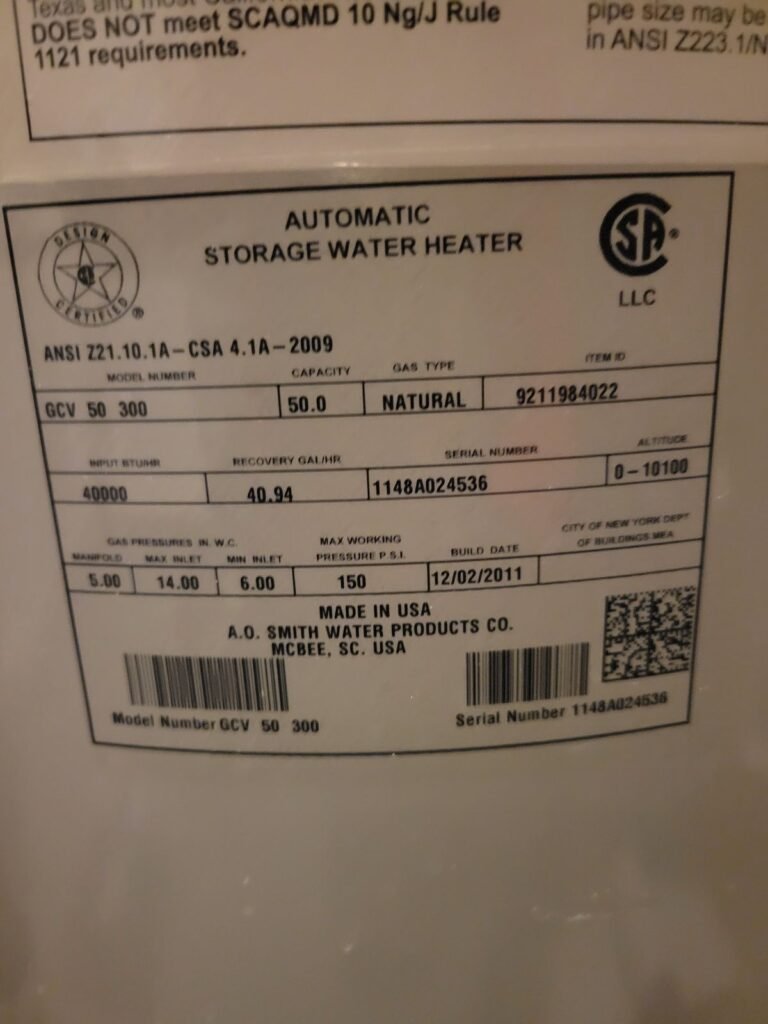
The manufacture date is usually encoded in the serial number on the rating label on the side of the tank. Each brand uses its own format, often a letter or number for the month and digits for the year. If the label is hard to read or the code isn’t obvious, a plumber can usually tell you the age in a minute.
7 signs your water heater is failing
1. It’s more than 10 years old
Age alone isn’t a reason to panic, but a tank heater past about 10 years is in the window where leaks become more likely. It’s a good time to start planning.
2. Rusty or discolored hot water
Rust-colored water from the hot taps only can mean the inside of the tank is corroding. If only the hot side is discolored, the heater is the likely source.
3. Rumbling, popping or banging
These sounds usually come from sediment at the bottom of the tank. It makes the heater work harder and can lead to overheating and leaks.
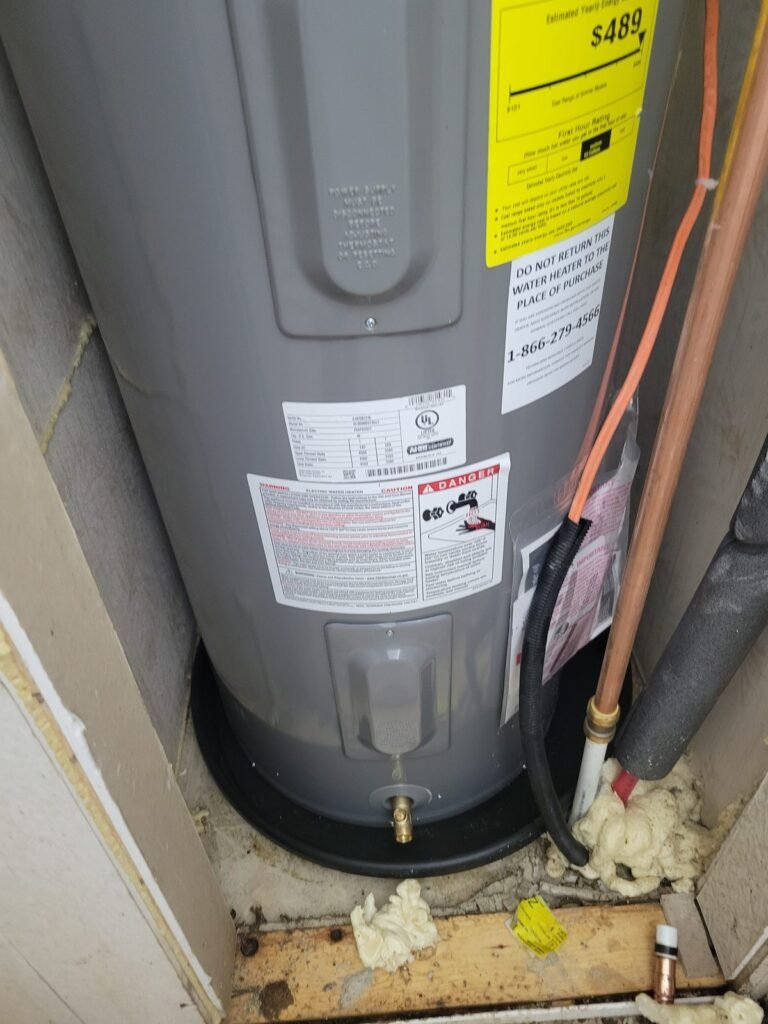
4. Moisture, rust or water around the base
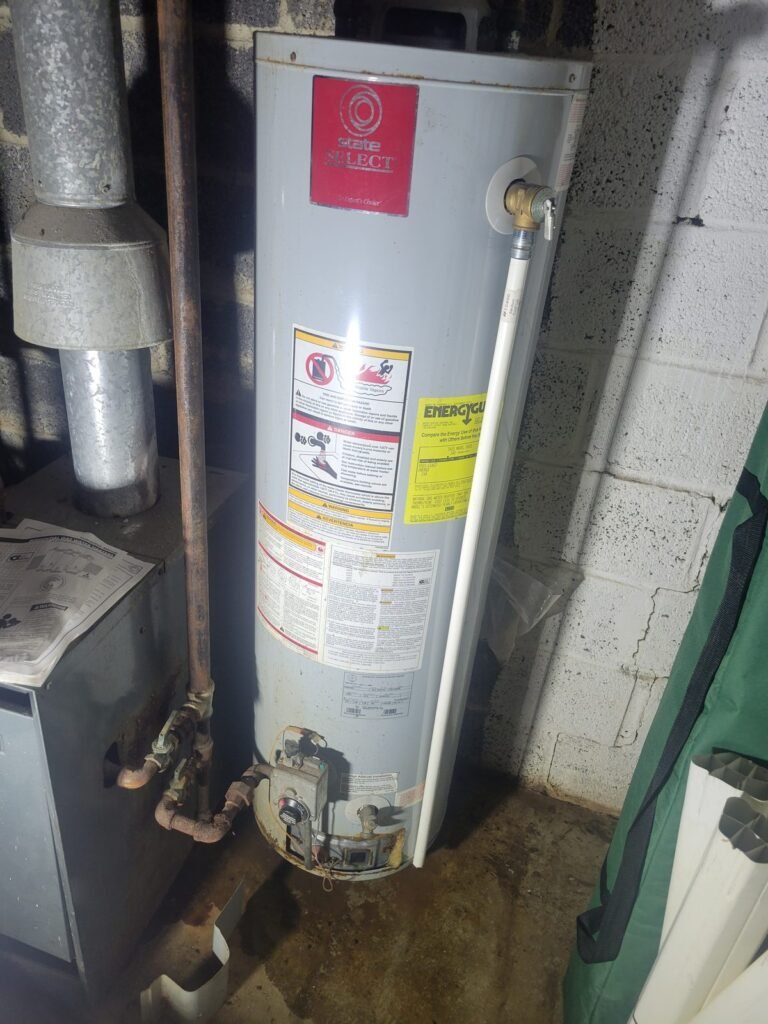
Any water under the heater, or rust around the bottom, deserves attention right away. Our guide to leaking water heaters explains how to find the source.
5. Hot water runs out faster than it used to
Sediment takes up space and insulates the water from the heat source, so you get less usable hot water. On electric heaters, a failing element can cause the same symptom; see electric water heater not heating.
6. Repairs are becoming frequent
One thermocouple or element is normal. A string of repairs on an older heater usually means it’s time. Our guides to pilot light problems and no hot water cover the common ones.
7. Rust on fittings and connections
Corroded fittings at the top of the tank and on the relief valve are early signs of a system wearing out.
When to call a pro
If your heater shows two or more of these signs, or it’s past 10 years old and you’d rather replace it before it leaks, we’ll inspect it and give you an honest recommendation and a free, upfront quote.
How to make a water heater last longer
- Flush the tank once a year to remove sediment.
- Check the anode rod every few years and replace it before it’s used up. It protects the tank from corrosion.
- Keep water pressure under control with a pressure reducing valve and an expansion tank where needed.
- Set the temperature around 120°F unless you have a specific need for hotter water.
- Descale tankless heaters on the schedule your manufacturer recommends, more often with hard water.
Repair or replace?
For a heater under about 8 to 10 years old with a single failed part, repair is usually the better value. For an older heater, a leaking tank or a major failure, replacement usually makes more sense. If you’re weighing quotes, our guide to what affects the cost of replacing a water heater explains what should be included.
Key takeaways
- Tank water heaters typically last about 8 to 12 years; tankless often 20+.
- The serial number on the rating label usually shows the manufacture date.
- Rust, rumbling, leaks and shrinking hot water supply are warning signs.
- Annual flushing and anode checks help a heater last longer.
- Plan a replacement before an old tank leaks.
Frequently asked questions
How long does a water heater last on average?
Most tank water heaters last about 8 to 12 years. Tankless water heaters often last 20 years or more when they’re descaled regularly.
Should I replace my water heater before it fails?
If it’s past about 10 years and showing warning signs, replacing it on your schedule avoids a surprise leak and lets you compare options without pressure.
How can I tell how old my water heater is?
Look at the serial number on the rating label. Most brands encode the month and year of manufacture in it. A plumber can decode it quickly if it isn’t obvious.
Does flushing a water heater make it last longer?
Yes. Flushing removes sediment that makes the heater work harder and can cause overheating, element failures and corrosion at the bottom of the tank.
Do tankless water heaters really last longer?
Generally yes, because they don’t store water and have replaceable parts, but only if they’re descaled as recommended. Hard water can shorten their life considerably.

Need this fixed? We serve your area
Licensed plumbers and electricians on call 24/7 in these communities and across the DMV.
Related water heaters guides
Rather have a pro handle it?
Emergencies: call now and we’ll be on the way. For everything else, send your details and we’ll call you right back.
- ✓ Free estimates on installs & upgrades
- ✓ Licensed & insured in Maryland
- ✓ Open 24/7, including weekends