
Electric Tankless Water Heaters: Can Your Electrical Panel Handle One?
How electric tankless water heaters work, how much electrical capacity they need, and when a whole-house unit means a panel upgrade.
In this guide
Whole-house electric tankless water heaters need a lot of power at once, often several large dedicated circuits. Many homes with 100-amp or busy 200-amp panels don’t have enough spare capacity without an electrical panel or service upgrade. Smaller point-of-use units for a single sink need far less. Before buying one, have an electrician calculate your home’s electrical load.
Electric tankless water heaters are compact, need no venting and can provide continuous hot water, which makes them appealing, especially in homes without natural gas. But they come with one big requirement that’s easy to underestimate: electrical capacity. As a company with both licensed plumbers and licensed electricians, this is the first thing we check.
Why electric tankless heaters need so much power
A tank water heater heats water slowly and stores it, so a typical electric tank uses a single element of a few thousand watts at a time. A tankless unit has to heat water instantly as it flows through, raising cold incoming water to shower temperature in seconds. That takes far more power while it’s running. Whole-house electric tankless units commonly require two or three large dedicated circuits, and the total current can be a large share of what a typical home’s electrical service provides.
In winter, incoming water is colder, so the heater has to work even harder to deliver the same temperature. A unit that keeps up in July may fall short in January if it’s undersized.
Can your panel handle it?
| Your situation | What it usually means |
|---|---|
| 100-amp service or an older panel | A whole-house electric tankless unit usually isn’t practical without a service upgrade |
| 200-amp service with electric heat, range, dryer and AC | May not have enough spare capacity; a load calculation is needed |
| 200-amp service with gas appliances | Often has room, but the panel also needs open spaces for the new breakers |
| Point-of-use unit for one sink | Needs a much smaller circuit; often straightforward |
The only reliable answer comes from a load calculation, which adds up everything in your home that uses electricity and compares it to your panel and service rating.
What the electrical work involves
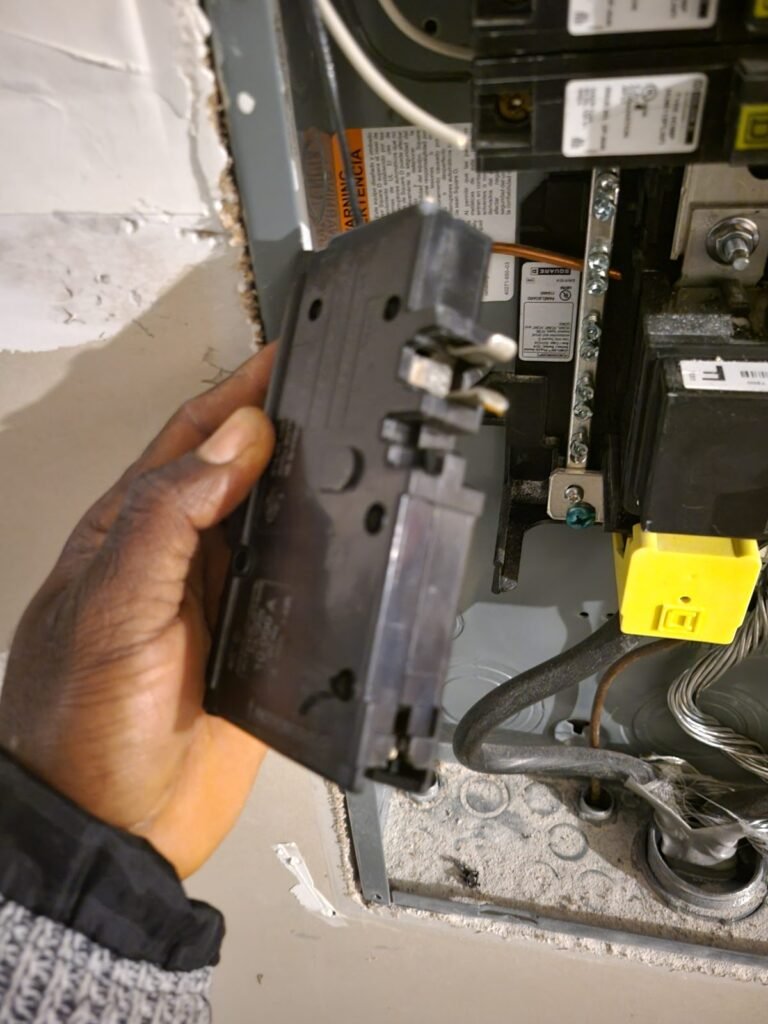
- New dedicated circuits sized for the unit, with heavy-gauge wire and the correct breakers.
- Panel space for multiple double breakers.
- A panel or service upgrade if your existing service can’t support the load, which may involve coordinating with your utility.
- Permits and inspection for both the electrical and plumbing work.
Electric tankless vs. other options
If your panel can’t support a whole-house electric tankless unit, there are good alternatives:
- A high-efficiency electric tank or heat pump water heater, which uses far less instantaneous power. Heat pump models are much more efficient than standard electric tanks.
- A gas tankless heater, if you have natural gas, though it usually needs a larger gas line and new venting.
- Point-of-use tankless units for a distant bathroom or kitchen, paired with a tank heater for the rest of the house.
For a broader comparison, see tankless vs. tank water heaters, and for installation costs, what affects the cost of replacing a water heater.
Plan it with a pro
Thinking about electric tankless? Our electricians will run a load calculation on your panel and our plumbers will check the water side, so you get one honest recommendation and one upfront price, including any panel work.
Electric water heater help across the DMV
We install electric tank, heat pump and tankless water heaters, and the circuits and panel upgrades they need, across Prince George’s, Montgomery and Anne Arundel counties, Washington, DC and Northern Virginia. Already have an electric heater that’s not working? Start with electric water heater not heating.
Key takeaways
- Whole-house electric tankless heaters need several large dedicated circuits.
- Many 100-amp and busy 200-amp panels can’t support one without an upgrade.
- A load calculation is the only reliable way to know.
- Heat pump, gas tankless or point-of-use units can be better fits for some homes.
- Undersized units struggle most in winter when incoming water is coldest.
Frequently asked questions
Do electric tankless water heaters need a panel upgrade?
Not always, but often. Whole-house units need several large dedicated circuits, and many homes don’t have enough spare capacity or panel space without an upgrade. A load calculation will tell you.
Can a 100-amp panel run an electric tankless water heater?
A small point-of-use unit, possibly. A whole-house unit usually not, once the rest of the home’s electrical load is considered.
Is electric tankless cheaper to run than an electric tank?
It avoids standby heat loss, so it can use less energy, but a heat pump water heater is usually far more efficient than either.
Do electric tankless heaters need venting?
No. Unlike gas units, electric tankless heaters don’t produce combustion gases, so they don’t need a vent.
Can you do both the plumbing and electrical work?
Yes. Essential Plumbing and Electric has licensed plumbers and electricians, so we handle the heater, circuits and any panel upgrade together.

Need this fixed? We serve your area
Licensed plumbers and electricians on call 24/7 in these communities and across the DMV.
Related water heaters guides
Rather have a pro handle it?
Emergencies: call now and we’ll be on the way. For everything else, send your details and we’ll call you right back.
- ✓ Free estimates on installs & upgrades
- ✓ Licensed & insured in Maryland
- ✓ Open 24/7, including weekends